Working Principles Of Three Types of Jig Machines:
This article explains the working principles, characteristics, and typical applications of three main types of jig machines: hydraulic, diaphragm, and sawtooth wave, providing a reference for selecting the right jig for different minerals and operational conditions.
I. Working Principle of the Hydraulic Jig
The hydraulic jig employs a mechanical-hydraulic drive system. A motor drives a cam through a variable speed mechanism, which pushes the plunger of an oil cylinder. This action is then transmitted via hydraulic pipelines to drive the jig, generating a periodic up-and-down pulsating water flow.
This equipment features a compact, fan-shaped jigging chamber design, resulting in a small footprint. Hydraulic transmission ensures low power consumption and stable operation.
The hydraulic jig has a large processing capacity and can be used for beneficiating minerals such as gold, tin, tungsten, manganese, hematite, and diamonds. It is particularly suitable for use on mining dredgers.
II. Working Principle of the Diaphragm Jig
The diaphragm jig uses a motor to drive an eccentric connecting rod mechanism, which causes a rubber diaphragm to perform a reciprocating motion, pushing the water to create pulsations. Under the action of this pulsating water flow, mineral particles stratify according to density: heavy minerals settle to the bottom, while light minerals are discharged with the overflow.
This equipment utilizes a diaphragm for drive, ensuring stable water pulsation and high separation precision.
The diaphragm jig is suitable for medium and fine-grained minerals, especially effective for separating fine-sized fractions with high recovery rates. It can be used for manganese ore, placer gold, tin ore, etc., and is widely applied in small and medium-sized concentrators.
III. Working Principle of the Sawtooth Wave Jig
This equipment employs a sawtooth wave-shaped water flow to enhance mineral stratification. The rising water flow is fast and short, while the falling water flow is slow and long. This creates a higher degree of bed looseness, facilitating the settlement of heavy minerals and improving separation efficiency.
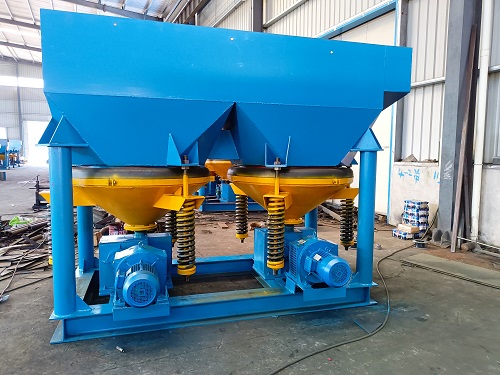
The sawtooth wave jig offers advantages such as large processing capacity, simple operation, and low maintenance costs. It is widely used for the roughing operation of minerals like manganese ore, barite, iron ore, and placer gold.
Each of the three jig types described above has its own advantages, making them suitable for different minerals and operating conditions. Selecting the appropriate model can significantly improve beneficiation efficiency and recovery rates.
Categories
News
Contact Us
Contact: Jiangxi Victor International Mining Equipment
Tel: +86 15390744410
E-mail: sale06@miningshakingtable.com
Add: Guzhang industrial park, Shicheng, Ganzhou, Jiangxi, China